Photorealism
Light
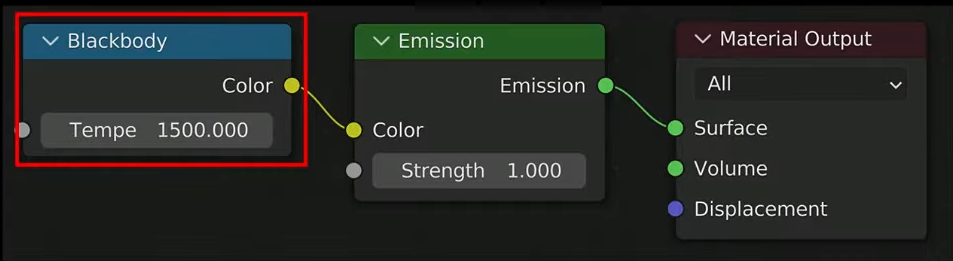
Most lights in the real world fall within the kelvin scale. This can be achieved with a blackbody node
Light Falloff
There is more light falloff than you would expect. Sunlight however has very little/no falloff.
If you want more falloff, bring lights closer to the object.
Light Size
similar effect to light falloff, size affects detail
Gobos
You can put plates in front of your light source called gobos, that will help to make lighting look more realistic
Material
Reflection - light that bounces directly off the surface
Refraction - light that is absorbed by the object
All objects are reflective, but even rough objects are reflective.
Always keep specular at 0.5%
The edge of an object is always reflecting (Fresnel)
Metals
Only metals tint reflection color. Other objects will reflect their base color
The tint will weaken Fresnel
Variance
Use a noise texture instead of simply moving the constant values. PBR textures for the most realistic values.
Exposure
Cannot expose for dark and bright lights at the same time. Either shadows or lights will clip.
Exposure Triangle
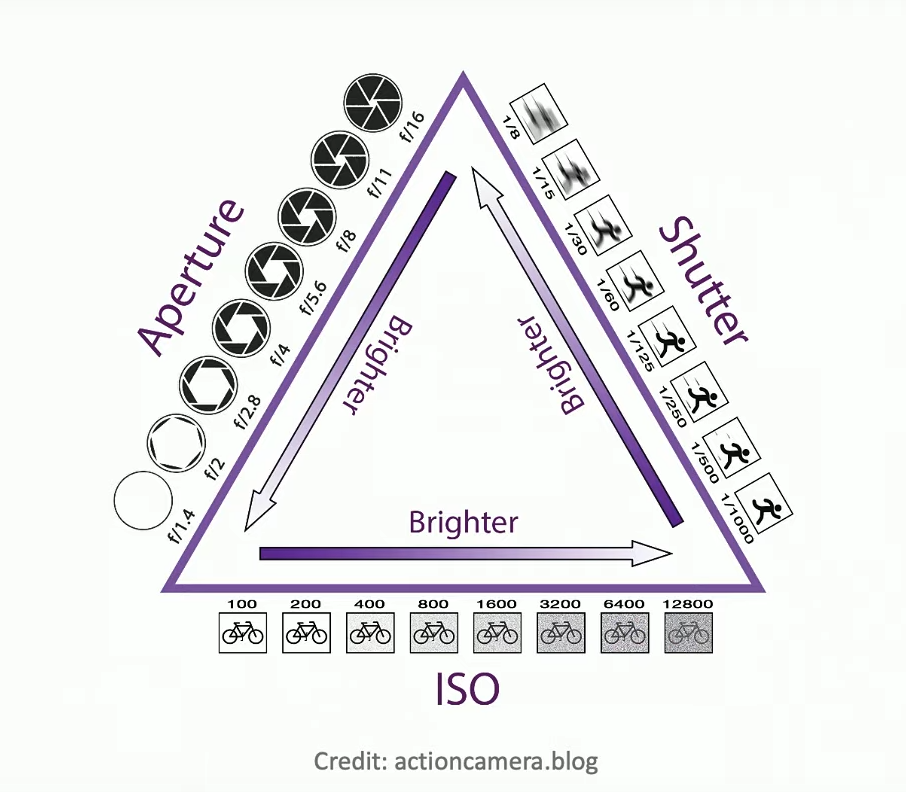
Aperture - Dictates the amount of light allowed in to the camera. This will dictate the depth of field.
In blender, adjust the f-stop under aperture This is scale dependent
Shutter Speed - Dictates how long the shutter is open. Generally night time shots will have more motion blur.
ISO - sacrifices clarity for brightness. Noise from a render engine is completely different from film
denoise your render and then apply a noise filter on top
Bonus: Barrel Distortion - warps the view, curving straight lines
Bonus: Glare appears where you have dark & bright lighting close by